Part of the AI, Future and War series. Analysis and hypothetical examples are identified in the text.
Compute has a physical location
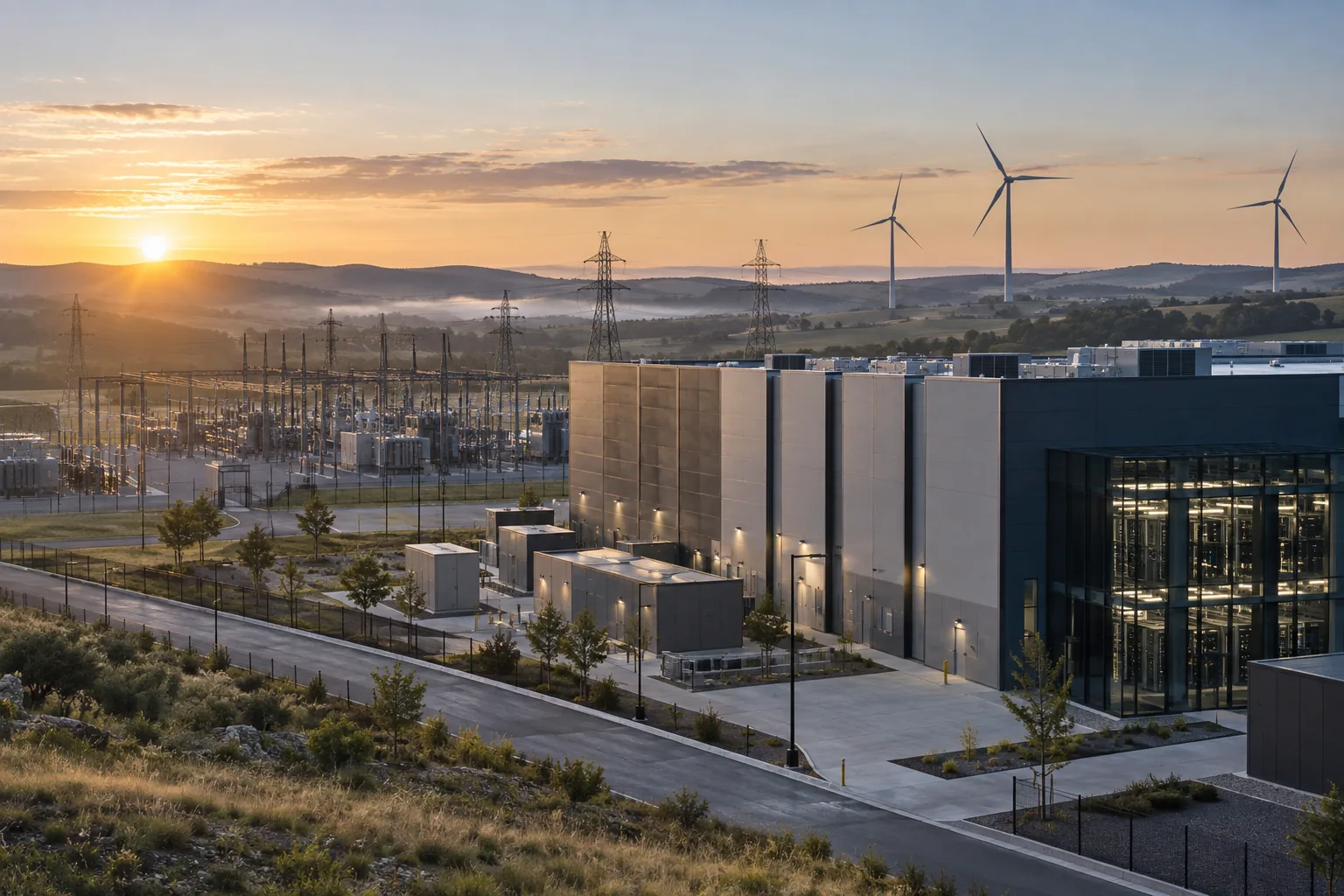
AI is often purchased as a digital service, but the service depends on physical infrastructure. Electricity supply, communications, cooling and equipment maintenance connect a remote model endpoint to local conditions. A geopolitical disruption can affect these dependencies even when the software itself continues to function correctly.
The IEA's Energy and AI report examines both the electricity needs of AI and the potential uses of AI in the energy sector. That two-way relationship is important: AI may support energy decisions while also increasing dependence on the systems supplying its own power. IEA: Energy and AI, 2025
Diversification needs more than a second contract
An organisation may contract with two technology providers and assume it has diversified. Yet the providers could rely on the same region, electricity network or supporting supplier. Independence should be investigated at the level of the service being purchased, subject to the information providers can reasonably disclose.
This article proposes a dependency review covering service region, recovery arrangements, data portability and any limits on moving workloads. Where information is unavailable, record the uncertainty. Do not convert a supplier's general resilience statement into a tested guarantee for a specific customer workload.
Capacity planning is also continuity planning
Consider a hypothetical research business running time-sensitive analysis through one cloud region. A temporary interruption may be manageable if work can be deferred. The same interruption becomes more serious if customers require results immediately and an alternative environment has never been tested.
A practical assessment would distinguish urgent inference, deferrable processing and experimental work. It would identify the minimum capability needed during disruption and check whether that capability remains available at acceptable quality. Substituting a different model can alter outputs; a working connection is not proof that the replacement is suitable.
Avoid false precision in energy scenarios
Forecasts of AI energy demand depend on adoption, efficiency, hardware and operational choices. A business should not take a global projection and apply it directly to its own continuity risk. Local capacity, contractual arrangements and workload flexibility may matter more than the headline trend.
A scenario exercise can instead ask what happens if power constraints restrict one region, if a major provider changes service availability or if moving data becomes more difficult. These are hypothetical stress conditions, not assertions that such events will occur. Their purpose is to reveal assumptions that would otherwise remain implicit.
Make efficiency part of resilience
Reducing unnecessary computation may lower operational dependence as well as cost. Options could include smaller validated models for bounded tasks, scheduled processing and careful retention of reusable results. Each choice needs evaluation against accuracy, confidentiality and service requirements; efficiency should not become an excuse to weaken essential controls.
The future of AI strategy will involve infrastructure decisions as well as model selection. Leaders should know which physical and contractual dependencies support their most important uses, how those uses degrade under stress and what evidence supports the recovery plan. A resilient AI portfolio can adapt its workload when resources become constrained instead of treating every task as equally urgent.