Edge AI and Local Intelligence: Why the Future of AI Will Not Live Only in the Cloud
How edge AI moves intelligence into devices, factories and infrastructure—and what leaders must solve around privacy, security, energy and reliability.
Computing FuturesPhotonic Computing for AI: Can Light Break the Energy Bottleneck?
A practical guide to photonic AI computing, its energy promise, engineering limits and potential role alongside GPUs in future data centres.
AI ReliabilitySynthetic Data and Model Collapse: Can AI Learn Safely from AI?
Why synthetic data can improve privacy and coverage yet also amplify errors, reduce diversity and create model-collapse risks without provenance controls.
AI GovernanceFrontier AI Evaluations and Safety Cases: Evidence Before Deployment
How capability tests, red teaming and structured safety cases can turn frontier-AI assurance into evidence-based release decisions.
Geopolitics of TechnologySovereign AI and National Compute: Strategy Beyond the Slogan
What sovereign AI really requires: compute, energy, skills, data governance, procurement resilience and international partnerships.
AI and ConflictAI in Cyber Conflict: When Attack and Defence Move at Machine Speed
How AI changes cyber offence, defence and escalation—and why autonomy, attribution and human control need explicit limits.
AI and ConflictAI, Nuclear Command and Strategic Stability: Why Speed Can Increase Risk
An evidence-led examination of AI decision support, warning systems and escalation risk in nuclear command and strategic stability.
AI and ConflictDrone Swarms and Machine-Speed Warfare: Capability, Limits and Control
What drone swarms could change in conflict, where current autonomy falls short and why accountability and civilian protection remain central.
Digital SocietyAI Influence Operations and Democratic Resilience Beyond Deepfakes
Why AI-driven influence is about targeting, testing and distribution—not only deepfakes—and how democratic institutions can build resilience.
Climate FuturesDigital Twins for Climate-Resilient Cities: From Visual Models to Decisions
How city digital twins can support heat, flood and infrastructure planning—provided uncertainty, maintenance and public accountability are designed in.
Climate FuturesAI Early Warning Systems for Climate Adaptation: From Forecast to Action
How AI can strengthen climate early warnings—and why coverage, communication, local trust and response capacity matter more than prediction alone.
Climate FuturesClimate Migration Forecasting: Useful Scenarios Without False Precision
How climate-migration models can inform planning without treating human movement as deterministic or exposing vulnerable people to harm.
Climate GovernanceSolar Geoengineering, AI and the Governance of Planetary Intervention
How AI may support solar-geoengineering research—and why uncertainty, unequal effects and global legitimacy require governance before deployment.
Energy FuturesAI and Fusion Energy: Accelerating Research Without Promising a Date
Where AI can help fusion research—from plasma control to materials—and why technical progress should not become a promise of near-term power.
Climate TechnologyAutonomous Ocean Systems: The Missing Layer of Climate Intelligence
How robotic floats, gliders and AI can expand ocean observation while managing maintenance, calibration, access and dual-use risk.
Food FuturesAI for Climate-Resilient Agriculture: Better Decisions, Not Digital Determinism
How AI can support climate-resilient farming through forecasts, crop monitoring and resource decisions—without excluding smallholders.
Space FuturesSpace-Based AI and Orbital Intelligence: Processing Earth Data Before It Lands
Why satellites are gaining onboard AI, which decisions benefit from orbital processing and where reliability and governance must catch up.
Future of WorkAlgorithmic Management and Worker Power: The Future Workplace Is a Control System
How algorithmic scheduling, monitoring and performance systems reshape work—and what transparency, contestability and human judgement require.
Future SocietyAI in Public Services: Building a Capable Digital State Without Losing Trust
How governments can use AI for better public services while protecting rights, appeals, procurement integrity and democratic accountability.
AI and SustainabilityAI, Water and Data Centres: The Resource Question Beyond Electricity
How AI data centres use water directly and through electricity—and how location, cooling, disclosure and workload choices can reduce stress.
AI for Scientific DiscoveryAI-Designed Physics Experiments in 2026: When Artificial Intelligence Starts Inventing the Laboratory
How AI is moving from tuning experiments to proposing new physical configurations — and what reliability, simulation and human oversight must look like before AI-designed science becomes routine.
AI in HealthcareAI-Enabled Clinical Trials: Digital Twins, Agentic AI and the Future of Drug Development
A 2026 analysis of how AI, digital twins, patient matching and agentic data workflows could reshape clinical trials without weakening validation, regulation or human oversight.
AI and GenomicsAlphaGenome Atlas and the Future of Predictive Genomics: What Nine Billion DNA Variant Predictions Could Change
What the new AlphaGenome Atlas means for research on non-coding DNA, variant prioritization and AI-enabled biology — and why prediction at genome scale still requires experimental validation.
AI, Climate and InfrastructureWeatherNext 3 and the Future of AI Weather Forecasting: From Prediction Model to Decision Infrastructure
How faster, higher-resolution AI weather forecasting could reshape energy, logistics, agriculture and climate resilience — and why forecast skill must be translated into better decisions.
Multimodal and Agentic AIAgentic Video Understanding: When AI Decides What to Watch, Remember and Investigate
Why agentic video understanding is a major step for multimodal AI: systems can navigate long recordings selectively instead of processing every frame, opening applications in research, operations and personal computing.
 AI, Future and War
Military AI and the Future of War: Why Human Judgement Still Matters
How military AI changes decision-making, why human oversight can fail, and what meaningful accountability requires before high-stakes deployment.
 AI, Future and War
AI and Crisis Escalation: When Faster Analysis Increases Risk
An analysis of AI-driven crisis escalation, correlated mistakes and uncertainty, with practical ideas for slower, better-verified strategic decisions.
 AI, Future and War
Deepfakes in Wartime: Building a Reliable Verification Process
How organisations can verify crisis videos and messages using provenance, corroboration and clear escalation rules without trusting AI detectors blindly.
 AI, Future and War
AI and Civilian Infrastructure: Resilience During Conflict
A practical assessment of AI dependence in essential services, focusing on degraded operation, supplier concentration and tested recovery during disruption.
 AI, Future and War
AI, Maritime Disruption and War: A Better Supply-Chain Risk View
How AI can organise maritime disruption evidence while scenario analysis connects rerouting, delivery delays, working capital and supplier resilience.
 AI, Future and War
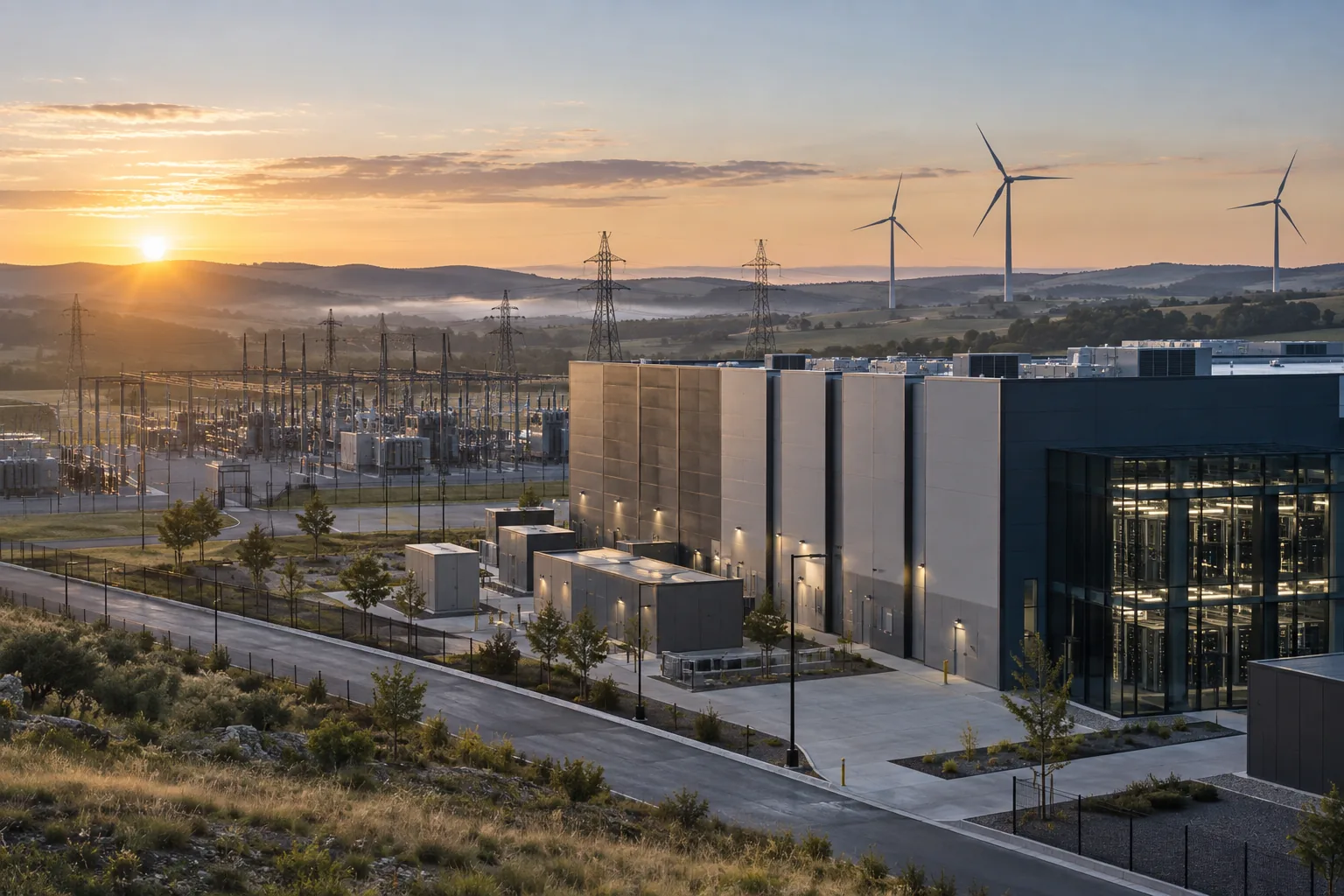
AI and Energy Security in a Fragmented World
Why AI resilience depends on electricity, physical infrastructure and supplier diversity, with scenario questions for geographically concentrated compute.
 AI, Future and War
Humanitarian AI in Conflict: Useful Assistance Without New Harm
How humanitarian organisations can assess AI translation and information tools while protecting sensitive data, maintaining access and correcting mistakes.
 AI, Future and War
AI and War-Risk Insurance: Understanding Accumulation Before Prediction
An insurance risk perspective on AI-supported exposure analysis, conflict scenarios, coverage uncertainty and correlated losses across connected businesses.
 AI, Future and War
Procuring AI for Crisis Decisions: Questions Leaders Should Ask
A practical procurement framework for AI used in crisis decisions, covering evidence, supplier changes, exit planning and the limits of demonstrations.
 AI, Future and War
AI and the Future of War to 2035: Three Scenarios for Leaders
Three explicitly hypothetical scenarios for AI and conflict by 2035, with indicators and practical resilience choices that avoid false forecasting precision.
Artificial IntelligenceThe EU AI Act Is Now Operational: Turning Transparency Rules into Product Controls
A practical 2026 framework for converting EU AI Act transparency duties into governed product controls, evidence, monitoring and accountable decisions.
Futurism and ForesightAI for Strategic Foresight: How to Improve Horizon Scanning Without Automating Judgment
An evidence-led framework for using AI in strategic foresight while protecting source quality, scenario diversity, human judgment and decision accountability.
Emerging TechnologyQuantum Sensing Beyond the Laboratory: A Readiness Framework for Critical Infrastructure
A practical framework for assessing quantum-sensing applications, noise resilience, validation evidence, deployment constraints and infrastructure readiness.
Digital SocietyEU Digital Identity Wallets in 2026: Designing Trust Without Creating a New Point of Control
How EU Digital Identity Wallets can improve verification while protecting selective disclosure, privacy, interoperability, recovery and user agency.
Technology and SustainabilityAI Data Centres and Electricity: Why Compute Strategy Must Become Grid Strategy
An evidence-led framework for connecting AI compute planning with electricity capacity, grid constraints, efficiency, resilience and location decisions.
Future SocietyAI Companions and Synthetic Relationships: What Happens When Machines Become Social Actors?
AI companions are becoming a distinct technology category. What current evidence says about attachment, well-being, design incentives and the future norms of human–AI relationships.
Artificial IntelligenceAutonomous AI Scientists: Can Self-Driving Laboratories Accelerate Discovery Without Losing Scientific Trust?
Self-driving laboratories are closing the loop between hypothesis, experiment and analysis. The next challenge is provenance, reproducibility, scale and scientific judgement.
Future HealthcareBrain–Computer Interfaces in 2026: Medical Breakthrough, New Interface or Both?
Brain–computer interfaces are making real medical progress while broader human-computer-interface claims remain speculative. A grounded look at restoration, enhancement and neural-data ethics.
Futures ThinkingQuantum Computing After the Hype: What Would Useful Quantum Advantage Actually Change?
Quantum computing matters when it solves valuable problems better than classical alternatives. A grounded guide to useful quantum advantage, hybrid systems and the signals that matter.
Future of WorkAI Tutors and the Future of Education: Personalised Learning Without Outsourcing Thinking
Generative AI can improve tutoring and teaching, but completing a task is not the same as learning. What pedagogy-first AI means for teachers, assessment and future skills.
Future HealthcareWhen AI Designs Biology: The Emerging Future of Proteins, Medicines and Synthetic Biology
Generative AI can search enormous protein design spaces, but generated sequences are hypotheses until biology validates them. How AI, wet labs and automation may reshape biotechnology.
Future SocietyThe AI-Generated Internet Needs Receipts: Can Content Provenance Help Us Know What Is Real?
Perfect AI detection may be impossible. Content provenance offers a different approach: record where media came from and how it changed. What Content Credentials can and cannot solve.
RoboticsPhysical AI and World Models: Why the Next AI Frontier May Be Outside the Screen
AI systems are moving from modelling language to acting in physical environments. World models, embodiment, simulation and the sim-to-real gap may define the next robotics frontier.
Future CitiesRobotaxis Are Becoming Real: How Autonomous Mobility Could Reshape Cities Without Fixing Congestion
Commercial robotaxis are expanding, but autonomy does not automatically solve traffic. A 2026 look at safety, empty miles, kerb space, labour, transit and urban policy.
Artificial IntelligenceNeuromorphic Computing in 2026: Can Brain-Inspired Chips Make AI More Efficient?
Neuromorphic computing promises event-driven, low-power AI hardware inspired by biological nervous systems. What 2026 research shows, what remains difficult and where it could matter first.